

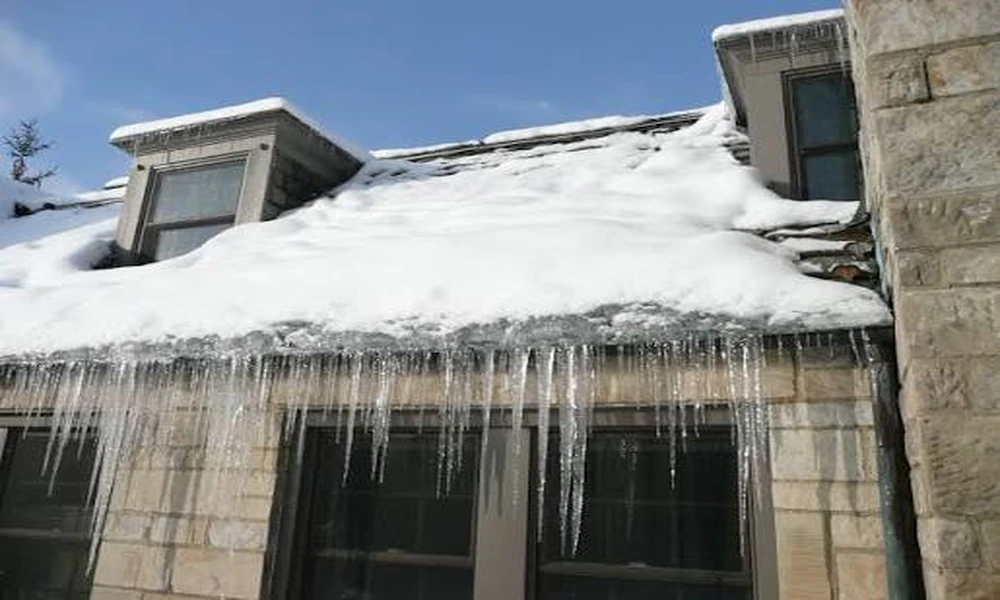
A ridge of ice along the bottom edge of a roof looks harmless. It isn’t. Melted snow collects on the uphill side of it. From there, the water creeps under the shingles. Indoors, a brown patch on the ceiling by an outside wall is usually what people notice first. Insulation and roofing makers explain these leaks at length, and homeowners can go to website guides from either for the detail. The short version is one line. Heat from the house is reaching the roof.
How the Ice Builds Up
It starts with a covering of snow. Air from the heated rooms slips up into the attic and warms it, which warms the boards above. The snow higher up the slope begins melting from below.
The water runs down until it reaches the eaves. That edge hangs out past the walls and stays cold, so the water freezes again. Day after day the ridge grows. Eventually water backs up behind it, under the shingles, and into the house.
Signs to Watch For
- Thick icicles hanging from the gutters, not just a few thin ones.
- Ice building up on the soffits under the overhang.
- Water stains on ceilings close to exterior walls.
- Gutters bending or pulling away under the weight of ice.
- Snow melting on the roof while neighbouring roofs are still white.
That last one is telling. An evenly snow covered roof usually means a cold attic, which is what the roof needs.
A Membrane at the Eaves
Building codes in snowy regions call for an ice barrier along the eaves. It’s a rubbery, self sealing membrane laid on the roof boards before the shingles go on, running from the edge to at least 24 inches inside the warm wall line. If water does get past the shingles, the membrane keeps it out of the house.
For product details on these membranes, homeowners can go to website pages from the major shingle makers and compare them. Lots of older roofs were built without one. Putting it in means pulling up the bottom few rows of shingles, so most owners wait and add it when the roof is replaced.
Dealing With Ice Already There
From the ground, a roof rake on a long pole can drag snow off the bottom few feet of roof. Less snow there means less meltwater feeding the dam.
Another trick uses calcium chloride. Filled into an old stocking and laid across the ice, it melts a channel the water can drain through. Rock salt is the wrong product here. It eats at shingles and kills the plants underneath.
Hacking at the ice with a hammer or shovel rips shingles. And an icy roof is no place to be standing. For heavy buildup, roofers bring steam equipment that melts the ice off gently, leaving the surface intact.
